

Every December, people around the world celebrate Christmas (even though Orthodox Christians celebrate Christmas in January)—not only as a religious holiday, but as a holiday of renewal, light, and family. Even in countries that don’t immediately spring to mind when we think of Christmas, the day has become a celebration. My strangest Christmas celebration took place in China with a group of my Chinese and Russian colleagues in, wait for it, a Brazilian restaurant! After all, who doesn’t enjoy a festive gathering with presents, good food, and of course, drink, together with family?
Most holidays are built on myths, and Christmas, as imagined by American culture, is no exception. Christmas was painted, printed, photographed, and filmed into existence. It was presented (or sold, depending on your perspective) not as a religious celebration, but as a vision of what happiness and family should look like, whether or not that ideal reflected reality.
Currier & Ives and the Perfect Illustrated Christmas
When I think of Christmas, I imagine gently falling snow, sledding down a hill, skiing with my kids, and, unfortunately, the holiday playlist my wife insists on blasting through the house, making the rest of us feel like we’re shopping at a crowded superstore.
Having grown up in Northern Europe, where snow reigns from November to March, I’ve always wondered why a “snowy Christmas” is such a core part of American culture, especially in places where a white Christmas is basically a coin toss.

It didn’t take long for me to discover that the 19th-century image-making company, Currier & Ives, made snow synonymous with Christmas and led us all to dream of a White Christmas.
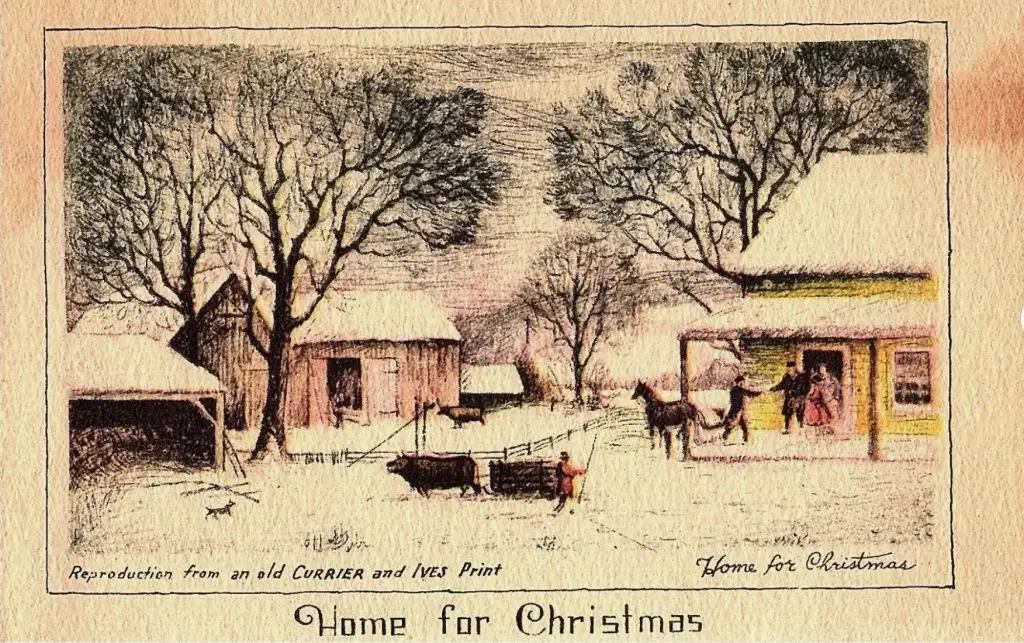
Currier & Ives produced hundreds of thousands of affordable prints, essentially precursors to Christmas cards that people would buy to hang on their walls. These hand-colored prints sold an irresistible vision of the “perfect Christmas”: softly falling snow, warm, glowing windows, gentle light, and happy families.
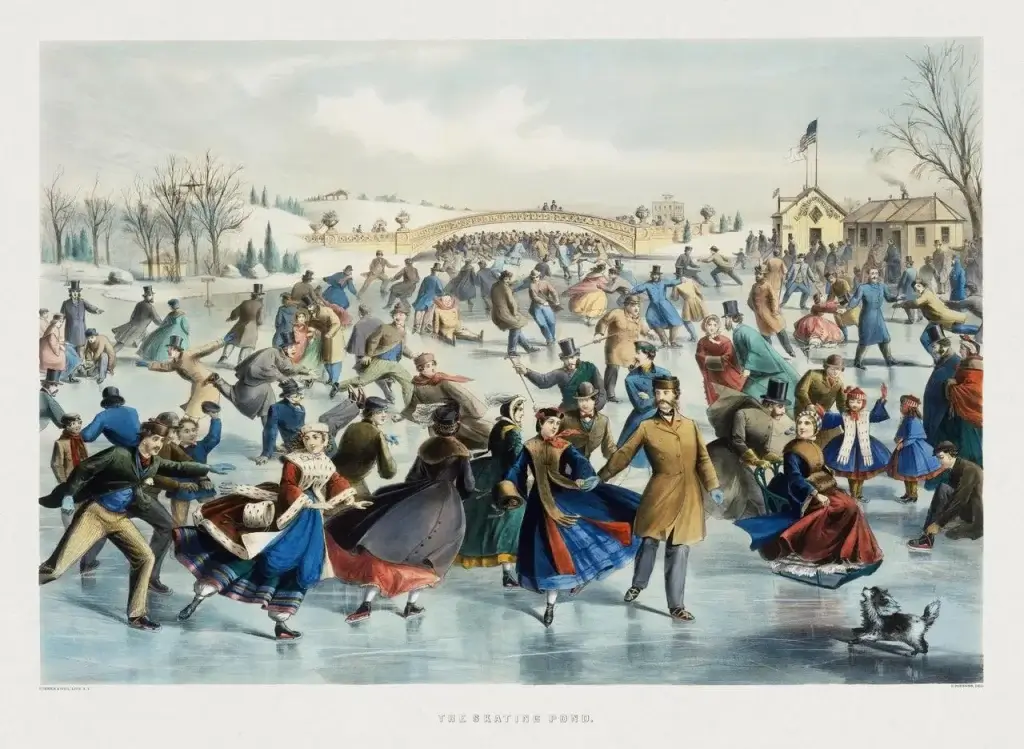
It was affordable sentimentality that you could buy, frame, and put in the living room.
Norman Rockwell and the invention of the American Christmas
Nearly a century later, Norman Rockwell transformed Christmas imagery from a pretty illustration into a visual argument about American aspiration. His paintings were a vision of what America ought to be, a place for family, abundance, and, in a turbulent world, a place of safety.
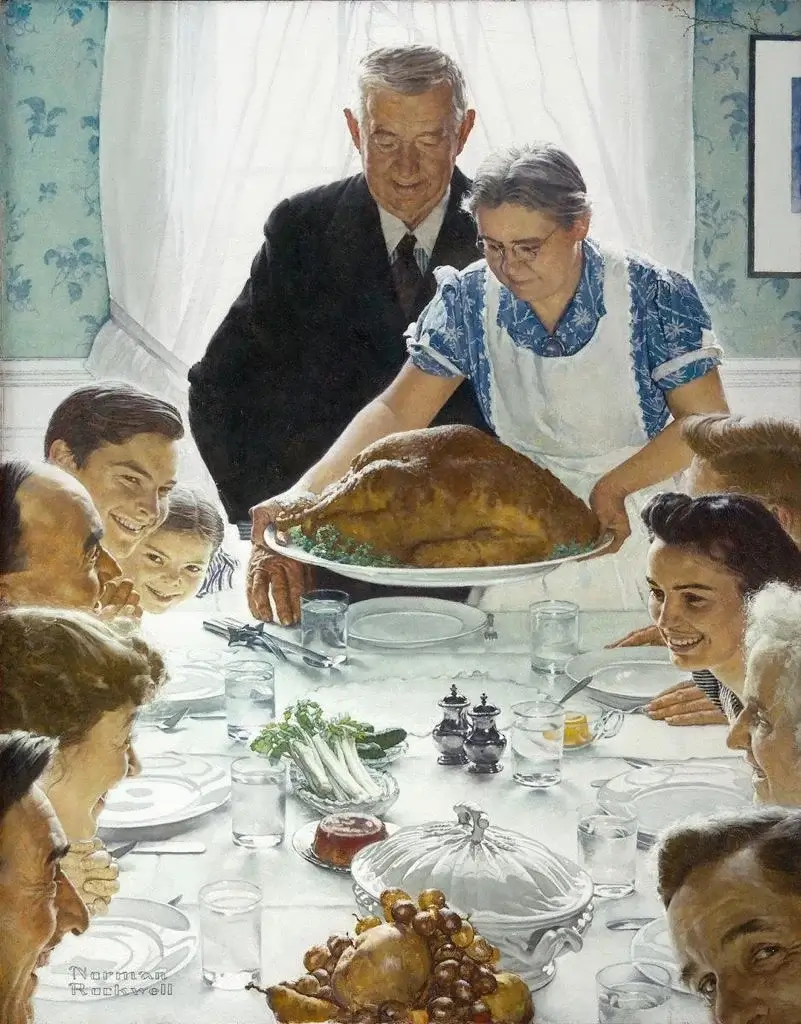
Rockwell’s role in shaping this idealized national identity cannot be overstated. His Christmas scenes were central to that mythology. He took the sweetness of Currier & Ives and elevated it into nothing less than a national virtue.
Together, Currier & Ives and Norman Rockwell created the template for the American Christmas: the frosty, snow-covered beauty of the world outside and the hope of “let it snow, let it snow, let it snow” and the glowing warmth of the brightly decorated family home and “chestnuts roasting on an open fire”.

Everything we now associate with the perfect Christmas, Hallmark cards, the classic holiday movies, and music playlists, department-store displays, even down to Christmas ornaments sold on Ebay and decorative wreaths on our doors, flows directly from the combined power of their visions.

Kodak and the Home-Made Dream
At the turn of the 20th century, Eastman Kodak brought the inexpensive, easy-to-use camera to most homes in America. And once again, as in almost every chapter of photography’s history, this changed everything.
By making photography simple and affordable, Kodak allowed families to create their own personalized versions of the Christmas dream. A family posed in front of a glowing tree or fireplace could produce their own Currier & Ives print with no illustrator required.
And just like those earlier prints, family photographs adorned mantlepieces and living-room walls across the country, reinforcing the myth one snapshot at a time.
The Christmas Myth Unwrapped
As much as Rockwell and many others tried to preserve a mythologized Christmas, artists of all stripes, from photographers and painters to movie directors, pushed against it. But this is a photography blog so I will talk about photography.
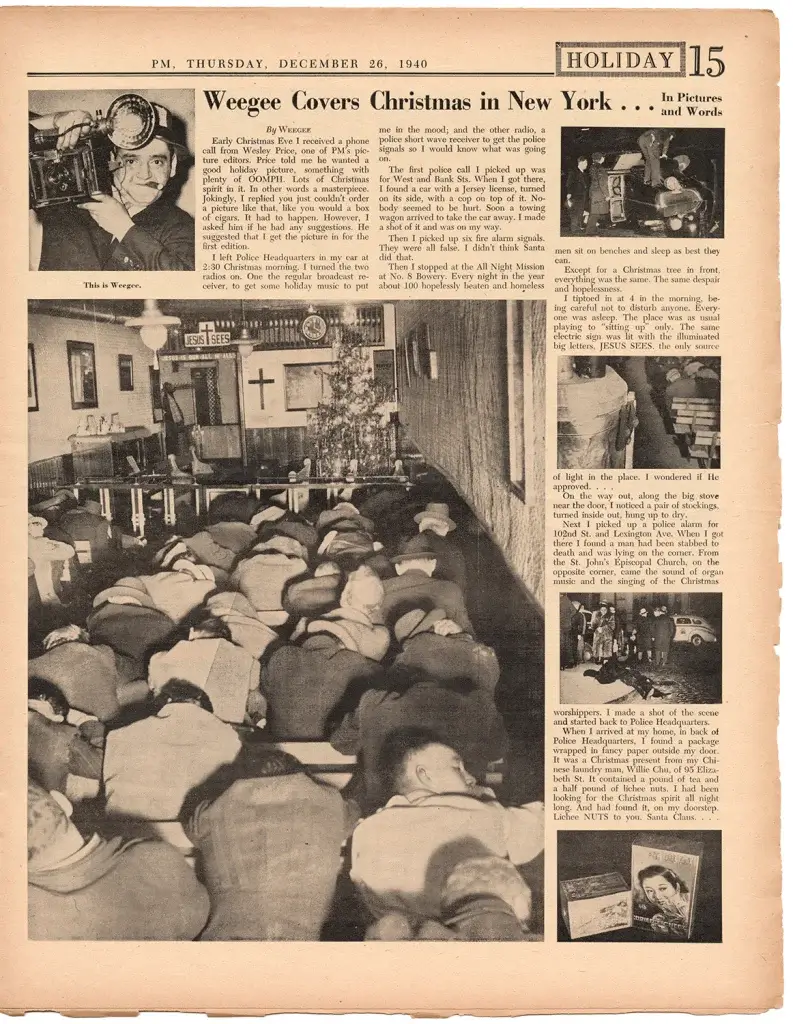
There are far too many photographers whose work focused on exposing the Christmas myth to be described in one blog post, so I’ll focus on just two: Weegee and Diane Arbus.
Weegee’s New York Christmas
Arthur (Usher) Fellig, who worked under the pseudonym of Weegee, was born in Ukraine and grew up in the crowded, impoverished tenements of New York. His world was nothing like Rockwell’s America, and that’s what he captured on camera.
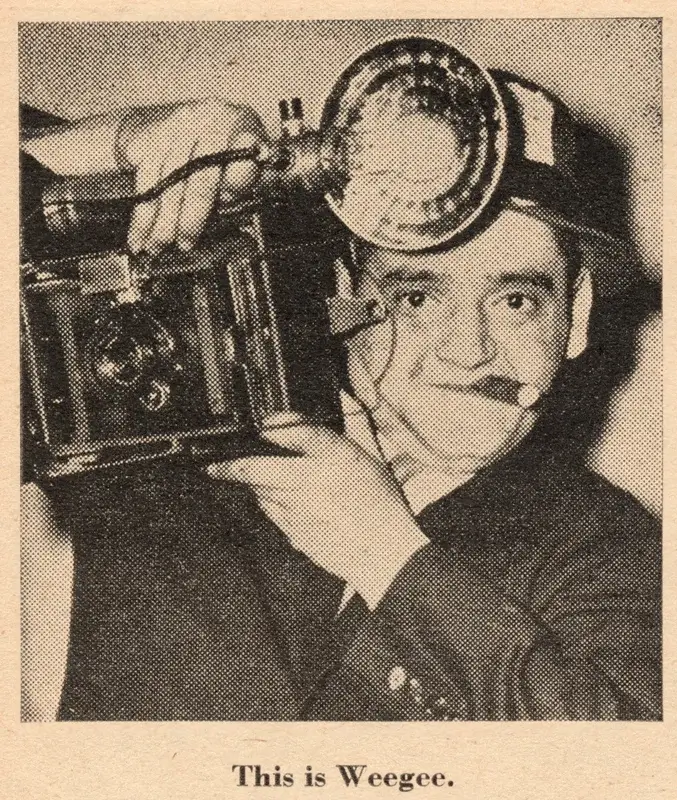
Some of his most iconic holiday-adjacent images include:
- “The Merry Christmas Drink” — a man passed out on the street, clutching a holiday bottle.
- “Joy of Living” — a family gazing longingly into a shop window at luxuries they can’t afford.
Where Rockwell painted the American dream, Weegee photographed the American reality, or at least the reality that he saw, especially in December, when cold, darkness, and financial strain can make the gap between expectation and reality painfully visible.
Diane Arbus and the Undoing of the Perfect Holiday
No conversation about the images representing American reality vs the American myth can be discussed without a conversation about Diane Arbus.
Weegee photographed the world outside, while Arbus focused her camera on the inner world of her subjects. It’s a world that does not fit the American Christmas myth. She captures discomfort, vulnerability, and the tensions inherent in all families.
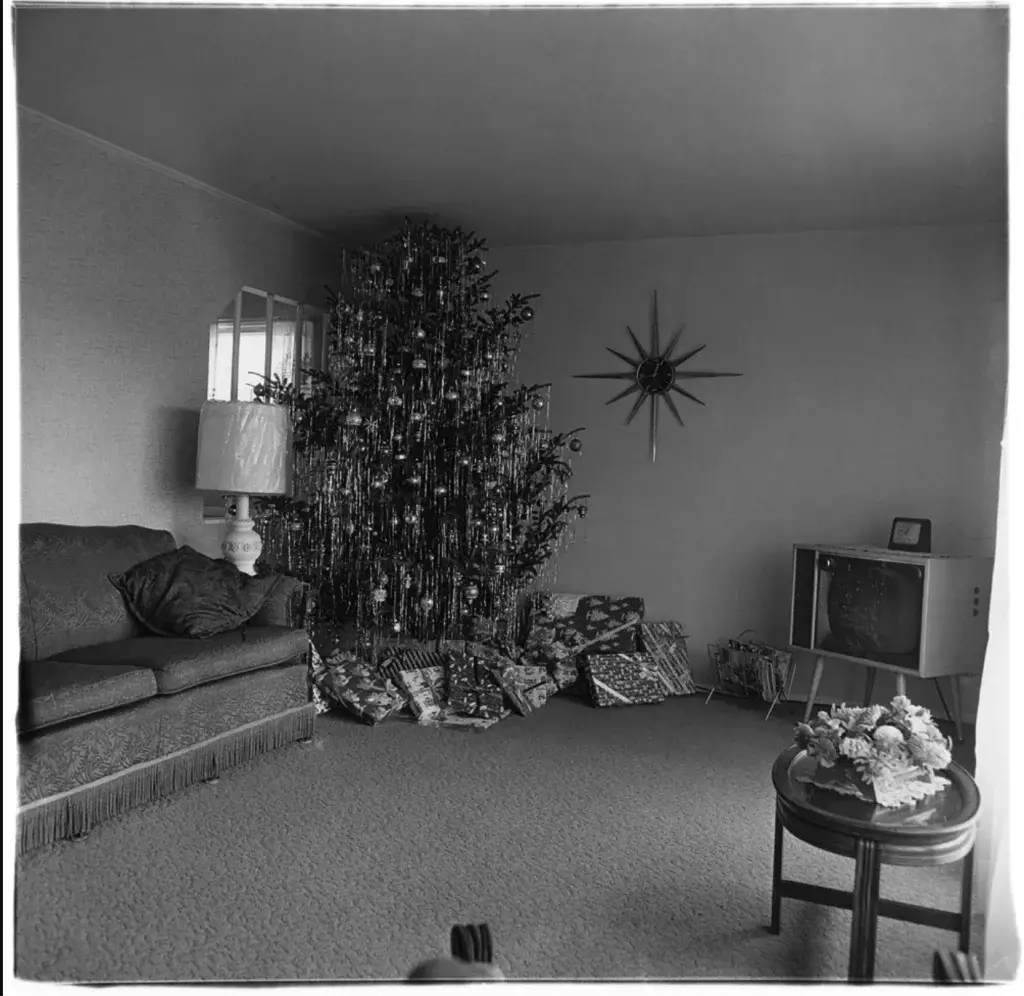
Her most famous Christmas photo is “The Lonely Christmas Tree.” It’s a picture of a small, barely decorated Christmas tree, crookedly leaning into an empty room. There is no better metaphor for the anti-Rockwell painting.
As with all other things, Christmas is not black and white; it’s not Currier & Ives and Rockwell vs Weegee and Arbus; it’s a bit of everything. It’s my wife’s holiday playlist, and the crowds at the mall are buying gifts that will be returned in just a couple of days. It’s a snowy wonderland in some years, and just a wish in others. It’s all of those things, it’s complexity and wonder.
Even Rockwell himself painted the occasional tipsy Santa, a quiet reminder that even our most “perfect” Christmas images have cracks around the edges. In real life, our holiday memories are a jumble of mismatched pajamas, relatives half-asleep on the couch, kids melting down next to the tree, and moments of real connection in between. The Christmas that lives in your photo albums and on your phone doesn’t have to be snowy or cinematic to be “right”—it just has to be yours. In the end, the ideal holiday isn’t the one Currier & Ives promised or Rockwell painted; it’s the one you make with the people you love, frame by frame, year after year.
That may be why these images endure; together, they capture the humanity of the most famous holiday of all!
Wishing you a joyful, peaceful, and snowy Christmas!